Some of the most iconic and enduring architectural marvels in human history are the Egyptian pyramids.
Built by ancient Egyptians, over a period of several centuries these colossal structures served as monumental tombs for their pharaohs and important individuals. Located near the Nile River in the northeastern part of Egypt, the most famous pyramid complex is at Giza, just outside of modern-day Cairo.
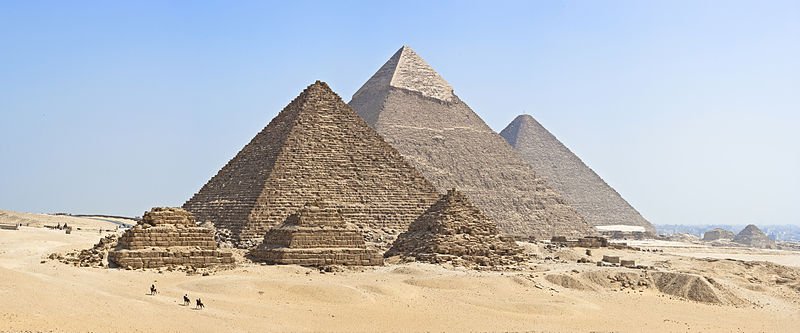
The most significant pyramid-building activity occurred during the Old Kingdom period. The construction spanned different dynasties and periods, with
roughly from 2630 BCE to 1750 BCE. The primary purpose of Egyptian pyramids was to serve as elaborate tombs for deceased pharaohs and high-ranking individuals. Believing in an afterlife the Egyptians designed pyramid to protect the pharaoh’s body and belongings for eternity.
Characterized by their distinctive pyramid shape, Egyptian pyramid were constructed with a square base and four triangular sides that meet at a point at the top. This design was believed to symbolize the sun’s rays.
To honor the deceased pharaoh, a mortuary temple for rituals and offerings were made Adjacent to the pyramid. To facilitate the movement of priests and offerings a causeway or long corridor were made which led from the mortuary temple to a valley temple or a pyramid town.
Inside pyramid, a central chamber containing a granite sarcophagus was placed to preserve the pharaoh’s body.
Astronomical phenomena, such as the cardinal points or celestial bodies were often carefully aligned with the pyramids.
Great Pyramid of Giza:
Characterized by their distinctive pyramid shape, Egyptian pyramid were constructed with a square base and four triangular sides that meet at a point at the top. This design was believed to symbolize the sun’s rays.
To honor the deceased pharaoh, a mortuary temple for rituals and offerings were made Adjacent to the pyramid. To facilitate the movement of priests and offerings a causeway or long corridor were made which led from the mortuary temple to a valley temple or a pyramid town.
Inside pyramid, a central chamber containing a granite sarcophagus was placed to preserve the pharaoh’s body.
Astronomical phenomena, such as the cardinal points or celestial bodies were often carefully aligned with the pyramids.
Great Pyramid of Giza:
This is the largest and most famous Egyptian pyramid. This is also known as the Pyramid of Khufu or the Pyramid of Cheops,. It was built for Pharaoh Khufu and is part of the Giza pyramid complex. It is considered one of the Seven Wonders of the Ancient World.
Pyramid of Khafre: This is the second-largest pyramid at Giza, built for Pharaoh Khafre. It looks taller than the Great Pyramid due to retaining some of its original casing stones. Pyramid of Menkaure: The smallest of the three main pyramids at Giza, built for Pharaoh Menkaure. The exact methods used to build the pyramids remain the subject of study and debate. It is generally believed that they were constructed using a combination of skilled labor, massive limestone or granite blocks, and a system of ramps to move and position the stones. The Egyptian pyramids are not only remarkable feats of engineering and architecture but also hold immense cultural and historical significance. They are symbols of the power and divinity of the pharaohs and provide valuable insights into ancient Egyptian beliefs, rituals, and society.
Today, the Egyptian pyramids continue to be among the most visited and studied archaeological sites in the world, attracting millions of tourists and researchers who seek to unravel the mysteries of these ancient structures.
 The News That Can Be Best Used