चुंबन का कंपन

चुंबन एक अनुष्ठान है, संस्कार है। इससे प्रेम, सम्मान और दुलार पनपना है, बशर्ते वह मर्यादित आचरण में हो। अन्यथा चुंबन कंपन पैदा करता है। पिछले दिनों ही चुंबन से जुड़ा एक वाकया हुआ है जिस पर चर्चा छिड़ गई है।


दरअसल स्पेन की फुटबॉल टीम की प्रमुख खिलाड़ी जेनी हार्मोसो का स्पेन फुटबॉल संघ के अध्यक्ष द्वारा चुंबन लिए जाने की चर्चा जोर पकड़ रही है। हाल ही में स्पेन की महिला फुटबॉल टीम ने पहली बार विश्व कप जीता और जीत के जश्न में तत्कालीन फुटबॉल संघ के अध्यक्ष लुईस रुबियालेस ने टीम की खूबसूरत खिलाड़ी जेनी हार्मोसो का चुंबन ले लिया जिसके फोटो और वीडियो सोशल मीडिया पर वायरल हो गए। इसे लेकर फुटबॉल संघ अध्यक्ष की आलोचना और निंदा हो रही है। इसके बाद उन्हें पद से हटा दिया गया है।
हमारे देश में भी चुंबन को लेकर विवाद होते रहे हैं। आपको याद होगा वो दृश्य जब संसद में अपना वक्तव्य देने के बाद जाते समय सांसद राहुल गांधी ने दूसरी महिला सांसद स्मृति ईरानी की तरफ फ्लाइंग किस का प्रदर्शन किया था और दूसरे दिन ईरानी ने इसे असभ्य व्यवहार कहकर उनकी भर्त्सना की थी जिसे आप इस लिंक पर क्लिक कर देख सुन सकते हैं।
https://twitter.com/scribe9104/status/1689197568004366336?s=20
दूसरा विवाद भी राहुल गांधी से ही जुड़ा हुआ है। लगभग 7 माह पहले एक रैली के दौरान सार्वजनिक तौर पर उन्होंने अपनी बहन प्रियंका गांधी का चुंबन ले लिया था। चुंबन लेने की भाव भंगिमा बहुत विचित्र थी जिसकी कुछ लोगों ने आलोचना भी की थी। https://youtube.com/shorts/wPRg2iamwIo?si=pP5Pbl755PSSo1Ts
अभी हाल ही में एक फिल्म के प्रीमियर के दौरान मशहूर फिल्म अभिनेता धर्मेन्द्र और अभिनेत्री शबाना आजमी के बीच चुंबन चर्चा का विषय बना था।

Going

मैं भी असली ढोंगी हूं

👉👉 Please like the post and share.

धनिकों का बहुत विरोधी हूं

फिर भी मैं धन का लोभी हूं

दर दर भटकूं धन की खातिर

रहने दो मुझे मैं जो भी हूं।

………………………………………………….

हूं उग्र स्वभाव का मैं बंदा

पर जीता बहुत संकोची हूं

चिंता का भाव लिए मैं सोचूं

मैं भी एक असली ढोंगी हूं।

………………………………………………….

है प्यार भरा दिल में मेरे

फिर भी मैं कितना क्रोधी हूं

तुम सोच रहे क्या चीज़ हूं मैं

मैं ये भी हूं मैं वो भी हूं।

………………………………………………….

सुंदर स्वस्थ है तन मेरा

फिर भी मैं मन का रोगी हूं

यश वैभव की परवाह नहीं

क्या मैं भी कोई योगी हूं।

………………………………………………….

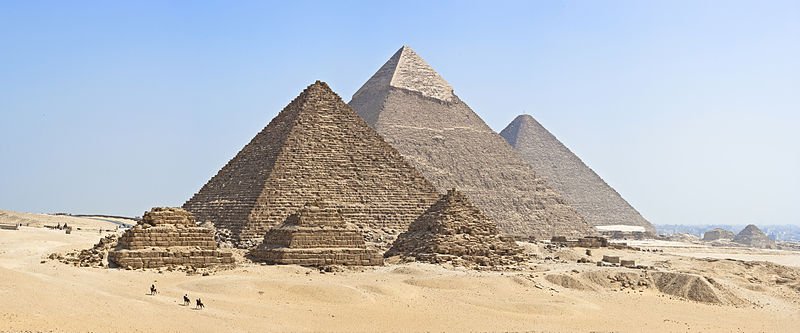
Egyptian Pyramid

Some of the most iconic and enduring architectural marvels in human history are the Egyptian pyramids.

Built by ancient Egyptians, over a period of several centuries these colossal structures served as monumental tombs for their pharaohs and important individuals. Located near the Nile River in the northeastern part of Egypt, the most famous pyramid complex is at Giza, just outside of modern-day Cairo.

Courstey Google

The most significant pyramid-building activity occurred during the Old Kingdom period. The construction spanned different dynasties and periods, with

roughly from 2630 BCE to 1750 BCE. The primary purpose of Egyptian pyramids was to serve as elaborate tombs for deceased pharaohs and high-ranking individuals. Believing in an afterlife the Egyptians designed pyramid to protect the pharaoh’s body and belongings for eternity.

Characterized by their distinctive pyramid shape, Egyptian pyramid were constructed with a square base and four triangular sides that meet at a point at the top. This design was believed to symbolize the sun’s rays.

To honor the deceased pharaoh, a mortuary temple for rituals and offerings were made Adjacent to the pyramid. To facilitate the movement of priests and offerings a causeway or long corridor were made which led from the mortuary temple to a valley temple or a pyramid town.

Inside pyramid, a central chamber containing a granite sarcophagus was placed to preserve the pharaoh’s body.

Astronomical phenomena, such as the cardinal points or celestial bodies were often carefully aligned with the pyramids.

Great Pyramid of Giza:

Characterized by their distinctive pyramid shape, Egyptian pyramid were constructed with a square base and four triangular sides that meet at a point at the top. This design was believed to symbolize the sun’s rays.

To honor the deceased pharaoh, a mortuary temple for rituals and offerings were made Adjacent to the pyramid. To facilitate the movement of priests and offerings a causeway or long corridor were made which led from the mortuary temple to a valley temple or a pyramid town.

Inside pyramid, a central chamber containing a granite sarcophagus was placed to preserve the pharaoh’s body.

Astronomical phenomena, such as the cardinal points or celestial bodies were often carefully aligned with the pyramids.

Great Pyramid of Giza:

This is the largest and most famous Egyptian pyramid. This is also known as the Pyramid of Khufu or the Pyramid of Cheops,. It was built for Pharaoh Khufu and is part of the Giza pyramid complex. It is considered one of the Seven Wonders of the Ancient World.

Pyramid of Khafre: This is the second-largest pyramid at Giza, built for Pharaoh Khafre. It looks taller than the Great Pyramid due to retaining some of its original casing stones. Pyramid of Menkaure: The smallest of the three main pyramids at Giza, built for Pharaoh Menkaure. The exact methods used to build the pyramids remain the subject of study and debate. It is generally believed that they were constructed using a combination of skilled labor, massive limestone or granite blocks, and a system of ramps to move and position the stones. The Egyptian pyramids are not only remarkable feats of engineering and architecture but also hold immense cultural and historical significance. They are symbols of the power and divinity of the pharaohs and provide valuable insights into ancient Egyptian beliefs, rituals, and society.
Today, the Egyptian pyramids continue to be among the most visited and studied archaeological sites in the world, attracting millions of tourists and researchers who seek to unravel the mysteries of these ancient structures.

Sulfur found near the moon’s south pole

According to Indian space agency ISRO, it’s Chandrayaan-3 has detected sulfur, an element that is usually found near volcanoes, near the moon’s south pole a hints of moon’s volcanic history. If it is found in reserve, will help in building infrastructure on the moon.

The solar-powered Pragyan rover began its quest for frozen water on moon.

Equipped with a chemical analysis tool powers it to beam a laser onto the lunar surface and zap soil particles into a plume of plasma.

This is the first time the element has also been detected near the south pole. Sulfur could even replace moon water while building infrastructure or habitats.

जीवन में पेलम पेला है

अब चारो ओर झमेला है,

क्या महाभारत की बेला है,

तिल तिल मरती मानवता,

जीवन में पेलम पेला है।

भीड़ भरी इस दुनिया में,

इंसान खड़ा अकेला है,

सुख चैन खोजने भाग रहा,

जिस ग्रह पर दुःख का मेला है।

विज्ञान भरी इस दुनिया में,

नैतिकता का कहां बसेरा है,

परेशान भगवान भी हैं,

इस जग का कहां सवेरा है।

सोच जरा हे नश्वर प्राणी,

क्या तेरा क्या मेरा है,

कुछ करना है तो, कर अच्छा,

यह जग माया का फेरा है।

हाहाकार अशांत है जग,

क्या चलाचली का बेला है

कुछ सूझ रहा नहीं मुझको

ये भी साला एक खेला है।

तुम कब सुधरोगे इंसान

आज के इंसान की सोच इतनी गिर गिर चुकी है कि वह हर किसी को नीचे गिराना चाहता है, दूसरे को अपमानित कर, व्यंग्य कसकर मनोरंजन करना चाहता है। कोई भी पेशा हो कोई भी शहर हो कैसी भी छोटी बड़ी कंपनी हो, चमचों और दलालों की पैठ इतनी गहरी जम चुकी है कि वे मिटाए ना मिटे। मुझे यह समझ नहीं आता कि इन नीच घिनौनी हरकतों से किसी को क्या हासिल होता होगा। गा़ंव, मोहल्ले, शहर हर जगह नीचों, दुष्टों और हरामियों का बोलबाला है।

ये गोलबंदी का युग है। गोलबंदी उन शैतानी ताकतों का जिनके जीवन में न कोई नैतिकता है और ना ही कोई सिद्धांत। इनके जीवन में सिर्फ पैसे और सबसे आगे रहने की भूख है भले ही इसके लिए उन्हें गंदे से गंदा और घटिया से घटिया हरकत क्यों ना करनी पड़े।

ऐसी ओछी हरकतों से तुम्हें कुछ पैसे अधिक मिल जाता होगा कुछ सम्मान मिला जाता होगा लेकिन यह भी सच है नासमझों कि इससे तुम्हारे जीवन में सुकून तो बिल्कुल भी नहीं आता होगा। आखिर एक दूसरे के खिलाफ साजिश करके तुम्हें क्या मिलता है। जितना दिमाग तुम दूसरों को नीचा दिखाने में लगाते हो उतना खुद को बेहतर बनाने में क्यों नहीं लगाते जिससे तुम्हारे जीवन में शांति और आनंद आए।

मेरा कई जगहों पर काम करने का अनुभव है। हर जगह सिर्फ और सिर्फ चापलूसी, चापलूसों का बोलबाला है। इनके मकड़जाल को तोड़ना आसान नहीं है। ऊंचे पदों पर बैठे लोग या तो इस नीच मंडली का हिस्सा बन जाते हैं या कुंडली मारकर आंख मूंदकर मजा लेते हैं। वहीं संस्थाओं के मालिकों की दिलचस्पी सिर्फ पैसा बनाने में है। क्या इंसान जीवन में कुछ अच्छा करने की चाह से विरत हो गया है या इंसान यह भूल गया है कि वह इंसान है। इस समस्या ने बहुत कुछ नष्ट कर रखा है। गांव के गांव उजड़ गए। पंचायत राज व्यवस्था ने गांवों में लोगों को गोलबंदी के दलदल में धकेल दिया। लोगों को जाति संप्रदाय के नाम बांटते बांटते दरार इतनी गहरी कर दी इंसान की जिंदगी कूड़ेदान से बदतर हो गयी। पैसा कमाने के पीछे इंसान नंगा नाच रहा है।

इन विकृतियों को देखकर मुझे भी कुछ अहसास हो रहा है। शायद मौत का त्योहार आने वाला है। क्योंकि….

जब जब मानवता मरती है

पृथ्वी पापों से लदती है

तब इसे बचाने हे प्राणी

प्रकृति प्रकट कुछ करती है।

UNIVERSAL DEATH

Courtesy

https://www.nationalww2museum.org/war/articles/hiroshima-norman-cousins-1945

Audiences watching Christopher Nolan’s 2023 motion picture Oppenheimer were subjected to an unforgettable image. Late in the film, Nolan has J. Robert Oppenheimer, masterfully portrayed by Cillian Murphy, imagine a scenario of total nuclear war. The shots of Earth ablaze in that movie presaged the most dreadful possible outcome of the arms race between the United States and the Soviet Union that so frightened Oppenheimer.
Ever since Norman Cousins’s August 1945 essay on the atomic bomb, “Modern Man is Obsolete,” some of the world’s most thoughtful minds have addressed, with extreme urgency, the shadow cast over planetary life by nuclear and thermonuclear weapons. Ten years after the conclusion of World War II and the defeat of the Axis powers, a text bearing two famous names prompted a new round of debate.

On July 9, 1955, a document was published by the esteemed octogenarian British philosopher and mathematician Bertrand Russell. It carried the endorsement of the late Albert Einstein, who had died a few months earlier.[i] Some of the leading scientists in the world, including Max Born, Joseph Rotblat, Percy Williams Bridgman, and Linus Pauling, affixed their signatures to it. Known since as the Russell–Einstein Manifesto (Russell wrote the text), this was an international event. The Manifesto appeared exactly one week before the 10th anniversary of the Trinity test of the “Fat Man” plutonium weapon and shortly before celebrations of the end of the Pacific War.

In retrospect, this work forces us to peer back into the condition of the world in the mid-1950s. It is a world threatened by the rapidly expanding number of atomic bombs (Britain had acquired the bomb in 1952). More significantly, for Russell, the invention of the hydrogen bomb by both the Americans and the Soviets overshadows everything else that came before it. He takes the introduction of thermonuclear devices into the military establishments of the superpowers to be so momentous that he organizes the entire Manifesto around it. This new fusion weapon, he recognizes, was exponentially more powerful than the weapons dropped by the United States on Hiroshima and Nagasaki or detonated by the Soviets in August 1949. Russell cites contemporary estimates about the H-bomb as 2,500 times more powerful than the “Little Boy” A-bomb. The fact that the United States and Soviet Union both possessed this monstrosity by the end of 1953 heralded a new and ominous stage in the history of civilization. “All, equally, are in peril, and, if the peril is understood, there is hope they may collectively avert it,” Russell declares.

‘UNIVERSAL DEATH’
As he unfolds his argument, Russell concedes that there are things of which he—nor anyone else for that matter—can be certain. Who really can speak definitively about the destructive capability of the hydrogen bomb? How many would die in a conflict where thermonuclear arms were unleashed by both sides? One can only argue, says Russell, from a sense of probabilities and from reliance on great scientific and military authorities. He states in quite plain language: “We have found that the men who know most are the most gloomy.”
Proceeding from this state of honest uncertainty, the Manifesto wields tremendous rhetorical power. Russell points to the terrible situation where gigantic cities like Moscow, London, or New York City now can be obliterated by the H-bomb. Yet it was not only a question of megatons—the potential for mass death by radiation had metastasized as well. Russell recalls the case of Japanese fishermen like Aikichi Kuboyama (though he does not mention him by name) who had died in 1954 from the effects of fallout several months after the Castle Bravo test at Bikini Atoll. A planet fully irradiated from an all-out nuclear war, which Russell does not hesitate to presume as a distinct possibility, would end up as a dead world: “But the best authorities are unanimous in saying that a war with H-bombs might possibly put an end to the human race. It is feared that if many H-bombs are used there will be universal death, sudden only for a minority, but for the majority a slow torture of disease and disintegration.”

Universal death. No one can question the farsightedness of the phrase. Against naysayers, Russell invokes the specter of “universal death” as a means of mobilization. This was a menace that spared no nation, class, or individual. Political and moral responsibility in the (Thermo)Nuclear Age, the Manifesto infers, must presuppose worst-case scenarios. Whether sooner or later, a nuclear cataclysm would exterminate all of humankind. Here, Russell anticipates the ideas of philosophers Günther Anders and John Somerville (both great admirers of Russell and Einstein), with their alarming conceptions of “globocide” and “omnicide,” respectively.

The prospect of human extinction, then, compelled men, women, and children around the globe to come to grips with an inescapable choice: “Shall we put an end to the human race; or shall mankind renounce war?” The Russell–Einstein Manifesto permits no less catastrophic alternatives. Any war could lead to nuclear annihilation. So long as that possibility existed, war had to be completely eliminated from the sphere of human action. To do this, something only imagined in world history’s most advanced philosophical and religious conceptions, required two immediate objectives: First, peace between the American and Soviet blocs, described as an “agreement between East and West” in the text, and second, “an agreement to renounce nuclear weapons as part of a general reduction of armaments.” Obviously, these were no small feats in and of themselves.

Russell knew this all too well, having seen two world wars in addition to numerous other conflicts. He pleads with individuals to step out of their national and religious identities and return to their humanness. “We appeal as human beings to human beings,” he implores. “Remember your humanity and forget the rest.” Elsewhere in the text, he calls on people to remember they are a part of “the species Man” and to “consider yourselves only as members of a biological species.” The recourse to a sort of species consciousness or species awareness remains one of the perspicacious aspects of the Manifesto. Clearly, for Russell, the willingness to act from a basis of fundamental solidarity with other humans, irrespective of their nationality or ideology, had to take root for civilization to survive.

Even with its depiction of a monumental threat to humankind, the statement exudes an astounding optimism. Despite the carnage of World War II and what we now usually call the Holocaust, Russell holds to a perspective grounded in progress. In fact, he explicitly identifies “continual progress in happiness, knowledge, and wisdom” as something within reach of human beings. In its most brazenly utopian moment, the Manifesto asserts that a “way lies open to a new Paradise.” Many later critiques of the nuclear threat would repudiate, however, such progressivist assumptions.

What, then, was to be done? What course of action did the Manifesto propose to exit this terrifying global situation? In retrospect, the text slides quickly into a politics of moderation. It becomes an exhortation to world leaders, to “the governments of the world.” “To find peaceful means for the settlement of all matters of dispute between them” is the path forward advanced by Russell. What role would the masses of human beings imperiled by the bomb have? What political means would be marshaled to stem the tide of nuclear disaster? There is little in the text for readers seized by such questions. For all its moderation, the Manifesto was bound up with the goal of the most ambitious transformation of human society—to live and act without armed conflict.
LEGACY OF THE RUSSELL–EINSTEIN MANIFESTO
The Russell–Einstein Manifesto continues to be one of the signature documents of the early Cold War. Written for a general public, it sought to intervene in what seemed to be an arms race destined to head over the cliff—and take everyone down with it. For all his courage in confronting the specter of nuclear Armageddon, Russell does not anticipate in the text another “breakthrough” in the development of nuclear and thermonuclear armaments—the Intercontinental Ballistic Missile. It is the ICBM that haunts the closing moments of Oppenheimer, tormenting the nuclear physicist. This amalgamation of the rocketry originally pioneered by Wernher von Braun and others in Nazi Germany with nuclear warheads would make Russell, Oppenheimer, and the world tremble anew in the late 1950s.


What, If They Becomes conscious

Do you remember the movie 2001: A Space Odyssey and supercomputer turning into villain. What will be its ethical implications if AI developes consciousness.

Courtesy Google


Technological adavancement is raising a burning question whether an artificial intelligence system can achieve consciousness. AI systems have become remarkably good at mimicking humans. Entertainment industry has widely used the idea of artificial intelligence in science based fiction movies. However research reveals that Artificial intelligence has not reached at the point of consciousness yet.


Some neuroscientists, philosophers and computer scientists have prepared a criteria which will inform whether a system is getting conscious or not. The team has expressed concerns that it will have a serious moral impact if we fail to identify AI achieving consciousness. Leading companies building advanced AI systems like Microsoft and Google do believe in wonders of getting it consciousness yet are not bothered about it. Introducing the most advanced version of ChatGPT publicly they justified themselves by saying that AI advancement is focused on assisting human productivity in a responsible way to benefit the society as a whole rather than replicating human intelligence.
So how will it be known if it happens. To understand this one needs to understand consciousness. It is the experience of being or existence also known as the subjective experience like ours.

हौसला आफजाई

आज के दौर में जब मुश्किलें बढ़ती ही जा रही हैं और इंसान परेशान है, तो उसके मनोबल और हिम्मत को बढ़ाने के लिए कवियों और साहित्यकारों से बड़ा साथी कोई हो नहीं सकता। निदा फ़ाज़ली का शेर है

मन बैरागी, तन अनुरागी,

क़दम-क़दम दुश्वारी है

जीवन जीना सहज ना जानो,

बहुत बड़ी फ़नकारी है।

साहित्यकार श्रीकांत वर्मा का कथन है कि……

“जब इंसान अपने दर्द को ढो सकने में असमर्थ हो जाता है तब उसे एक कवि की ज़रूरत होती है, जो उसके दर्द को ढोए अन्यथा वह व्यक्ति आत्महत्या कर लेगा।”

तो आइए पढ़ते हैं प्रसिद्ध साहित्यकारों की हौसला आफजाई करने वाली कुछ कालजयी पंक्तियों को।

जीवन का अंतिम सत्य

क्या हार में क्या जीत में,

किंचित नहीं भयभीत मैं,

संघर्ष पथ पर जो मिले,

यह भी सही वह भी सही।

शिवमंगल सिंह सुमन

दाँव पर सब कुछ लगा है,

रुक नहीं सकते

टूट सकते हैं मगर

हम झुक नहीं सकते।

अटल बिहारी बाजपेई

वह पथ क्या

पथिक कुशलता क्या

जिस पथ पर बिखरे शूल न हों

नाविक की धैर्य परीक्षा क्या

जब धाराएँ प्रतिकूल न हों।

जय शंकर प्रसाद

साधो ये मुरदों का गाँव

पीर मरे पैगम्बर मरिहैं,

मरिहैं जिन्दा जोगी

राजा मरिहैं परजा मरिहैं,

मरिहैं बैद और रोगी

चंदा मरिहैं सूरज मरिहैं,

मरिहैं धरणि अकासा

चौदहो भुवन के चौधरी मरिहैं,

इन्हूं की का आसा

नौहूं मरिहैं दसहूं मरिहैं,

मरिहैं सहज अठासी

तैंतीस कोट देवता मरिहैं

बड़ी काल की बाजी

नाम अनाम अनंत रहत है,

दूजा तत्व न होई

कहत कबीर सुनो भाई साधो,

भटक मरो मत कोई।

कबीर दास

अगर पोस्ट अच्छी लगी हो तो लाइक अवश्य करिएगा। बाकी ऊपरवाले की मर्जी।

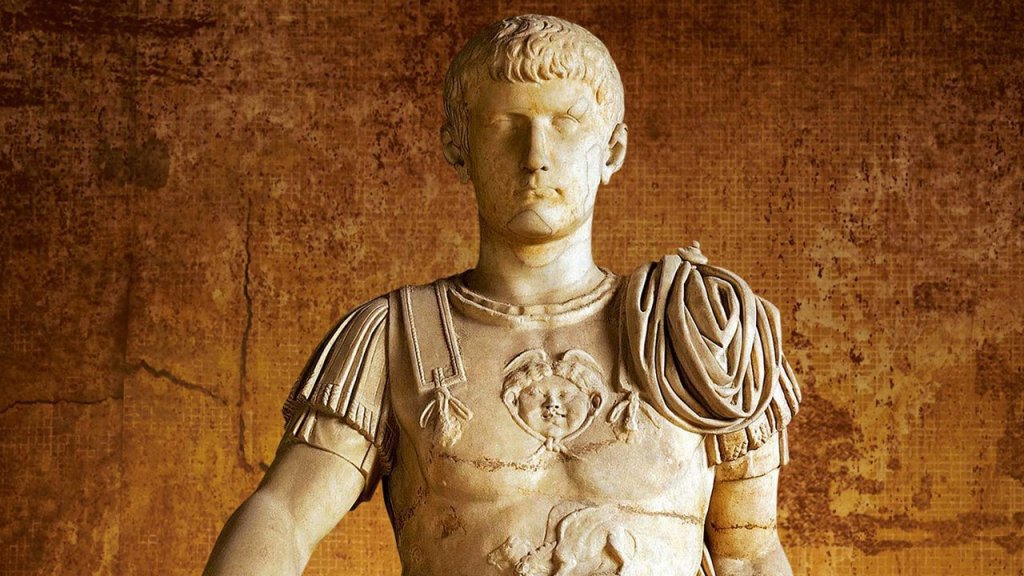
Julius Caesar

Caligula, whose full name was Gaius Julius Caesar Augustus Germanicus, was a Roman emperor who ruled from 37 AD to 41 AD. He is known for his controversial and often erratic behavior during his short reign.

Courtesy: twitter

Here’s an overview of Caligula’s life and rule: Caligula was born on August 31, 12 AD, in Antium (modern-day Anzio, Italy). He was a member of the Julio-Claudian dynasty, being the son of Germanicus, a prominent Roman general, and Agrippina the Elder. His nickname “Caligula” means “little boot” in Latin, a term he earned during his childhood when he accompanied his father on military campaigns and was dressed as a miniature soldier. Caligula’s uncle, Tiberius, succeeded Augustus as emperor. After Tiberius’s death, Caligula was declared emperor at the age of 24. His early reign was marked by a period of goodwill and populism, as he released political prisoners and recalled exiles. However, Caligula’s behavior soon became increasingly erratic and autocratic. He engaged in lavish spending, held extravagant parties, and exhibited signs of megalomania. He claimed to be a god and demanded worship from his subjects. Some of his policies were seen as arbitrary and harsh, causing tensions among the senatorial class. Caligula’s rule took a darker turn as he became increasingly cruel and arbitrary. He engaged in acts of sadism and sexual excess, often targeting the nobility and influential individuals. He ordered the execution of several prominent senators, leading to a climate of fear within the Roman elite. Despite his controversial behavior, Caligula also initiated ambitious building projects. He started the construction of two massive ships, held lavish games, and began the construction of a canal through the Isthmus of Corinth. He also intended to build a bridge across the Bay of Baiae for his triumphal entry into Rome. Caligula’s excesses and erratic behavior ultimately led to his downfall. In 41 AD, a group of conspirators, including members of the Praetorian Guard and senators, assassinated Caligula. He was stabbed to death in a conspiracy that involved several individuals who were dissatisfied with his rule and saw him as a threat to the stability of the empire. Caligula’s reign is often remembered for its extravagance, cruelty, and the deteriorating relationship between the emperor and the Roman Senate. His assassination marked the end of the Julio-Claudian dynasty, and his death paved the way for the eventual rise of Claudius as the next Roman emperor.

This article has been taken from the following source. It’s Hindi version will be available if demanded. The link of the original source of the article is